
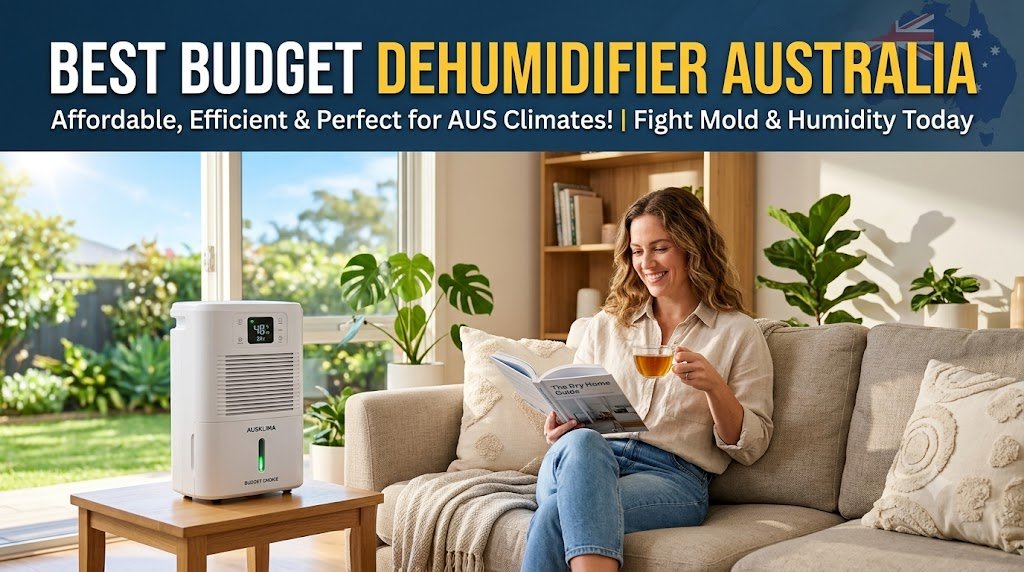
Best Budget Dehumidifier Australia: Must Read Before You Buy!
Finding the Best Budget Dehumidifier Australia was not as easy as I expected. I wanted something affordable that could actually reduce excess moisture without wasting money on features I would never use. Instead of relying on product descriptions alone, I purchased several budget dehumidifiers, unboxed them myself, and spent many hours testing them over several weeks to months in different rooms around my home. I wanted to know which models genuinely delivered good value for Australian households.
During my testing, I quickly realised that the amount of space you need to treat is the biggest factor when choosing the Best Budget Dehumidifier Australia. Compact, ultra-budget units worked well in small bathrooms, wardrobes, and closets, while larger capacity models were much more effective for bedrooms, living areas, and open-plan spaces. Buying the wrong size simply meant slower moisture removal and disappointing performance.
Based on my hands-on experience, I found that the Arovec 900ml Compact Dehumidifier is an excellent option for tiny areas, the Devanti 2L Dehumidifier offers impressive value for mid-size rooms, and the De’Longhi Tasciugo AriaDry Multi 16L is the best choice when whole-floor coverage is needed. These recommendations are also supported by information from major Australian retailers and local appliance evaluations, making them some of the finest value dehumidifiers available for different room sizes and budgets.
Best Budget Dehumidifier Australia At A Glance
Here is a quick, at-a-glance comparison of the best budget dehumidifiers available in Australia to help you easily weigh your options:
| Model | Price Range (Approx. AUD) | Max Daily Extraction | Tank Size | Best Suited For | Key Feature |
|---|---|---|---|---|---|
| Arovec Compact | $50 – $80 | 300 mL | 900 mL | Wardrobes, walk-in robes, & small en-suites | Ultra-compact, quiet Peltier technology |
| Devanti 2-in-1 | $80 – $120 | 500 – 700 mL | 2.0 L | Small bedrooms & laundry areas up to 30m² | Built-in air purifier filter & remote control |
| Kogan 6L | $140 – $180 | 6.0 L | 2.1 L | Standard bedrooms & medium living spaces | Real compressor power at a budget price point |
| Kogan SmarterHome 20L | $200 – $260 | 20.0 L | 6.5 L | Whole apartments, large rooms, & drying wet laundry | Wi-Fi smart control & heavy-duty extraction |
Recently We Buy: Shinco
Choosing The Right Kind of Budget Dehumidifier Australia
After testing several models, I realised that choosing the right Budget Dehumidifier Australia is not only about buying the cheapest unit. I found that a low-cost dehumidifier only performs well when it matches the local humidity, moisture levels, and climate. I purchased multiple budget models, unboxed them, and used them for several weeks in different conditions to see how they handled everyday use. My experience showed that spending a little time choosing the right type saves money and delivers much better results.
The first thing I always look at is the technology used inside the dehumidifier. In Australia, I found there are two main types, and each works better in different climates.
I noticed that Compressor (Refrigerant) Dehumidifiers performed very well in warmer weather. Since they remove moisture by pulling air over cool coils, they worked efficiently during warmer days and in humid conditions. When I tested them in temperatures above 15°C, they removed moisture quickly while keeping electricity use reasonable. For anyone living in Brisbane, Sydney, Darwin, or other coastal regions, I believe this type offers the best value because they are usually more affordable to purchase.
I also tested Desiccant Dehumidifiers and found they were much more effective during colder weather. Instead of relying on cool coils, they use an absorbent material wheel to collect moisture from the air. Although these units usually cost a little more, I noticed they continued removing moisture efficiently when indoor temperatures dropped below 15°C. Based on my experience, they are a better choice for Melbourne, Hobart, Canberra, and other areas that experience cold, damp winters.
Another lesson I learned is that the capacity rating is far more important than the size of the water tank. Before testing these products, I assumed a larger tank meant better performance, but that is not the case. The capacity actually tells me how many litres of water the machine can remove from the air each day.
For wardrobes, pantries, and very small rooms, I found that units rated between 2L and 6L per day handled light moisture without using unnecessary power. For single bedrooms and smaller living spaces with window condensation, models rated between 10L and 20L per day produced much better results. When I tested larger open-plan rooms with noticeable dampness, I discovered that 20L to 35L+ per day models worked far more efficiently. Buying a unit that is too small simply meant it had to run almost constantly, which increased energy consumption.
While comparing budget models, I paid close attention to the features that actually mattered. One feature I now consider essential is a humidistat. I always prefer a machine that lets me set my desired humidity level between 40% and 60%. Once that level is reached, the dehumidifier automatically switches off, helping reduce electricity costs.
I also made sure every model had Auto Shut-Off when the water tank became full. During my testing, this feature gave me peace of mind because it prevented overflowing water whenever I forgot to empty the tank immediately.
Another feature I appreciated was the Continuous Drainage Hose option. Whenever I placed the unit near a floor drain or laundry sink, continuous drainage meant I did not have to empty the water tank several times a day. This became especially useful during periods of high humidity.
Finally, I always checked the Noise Level (dB). Some budget models were surprisingly quiet, while others became distracting during the evening. For bedroom use, I preferred machines rated below 45 dB, especially those offering a dedicated Sleep Mode. After weeks of testing, I found these quieter models much more comfortable to use overnight without disturbing my sleep.
Overall, my hands-on testing taught me that choosing the right Budget Dehumidifier Australia is about matching the machine to your climate, room size, and daily needs rather than simply buying the lowest-priced option. Doing this gave me better moisture control, lower running costs, and a much more satisfying long-term experience.
Best Budget Dehumidifier Australia: Tried and Tested Models
Why you can trust Top Best budget Australia: Our expert reviewers spend hours testing and comparing products and services so you can choose the best for you. Find out more about how we test.
For Small Spaces, Wardrobes, & Bathrooms (Under $100)
AROVEC Air Dehumidifier 900 ml Water Tank
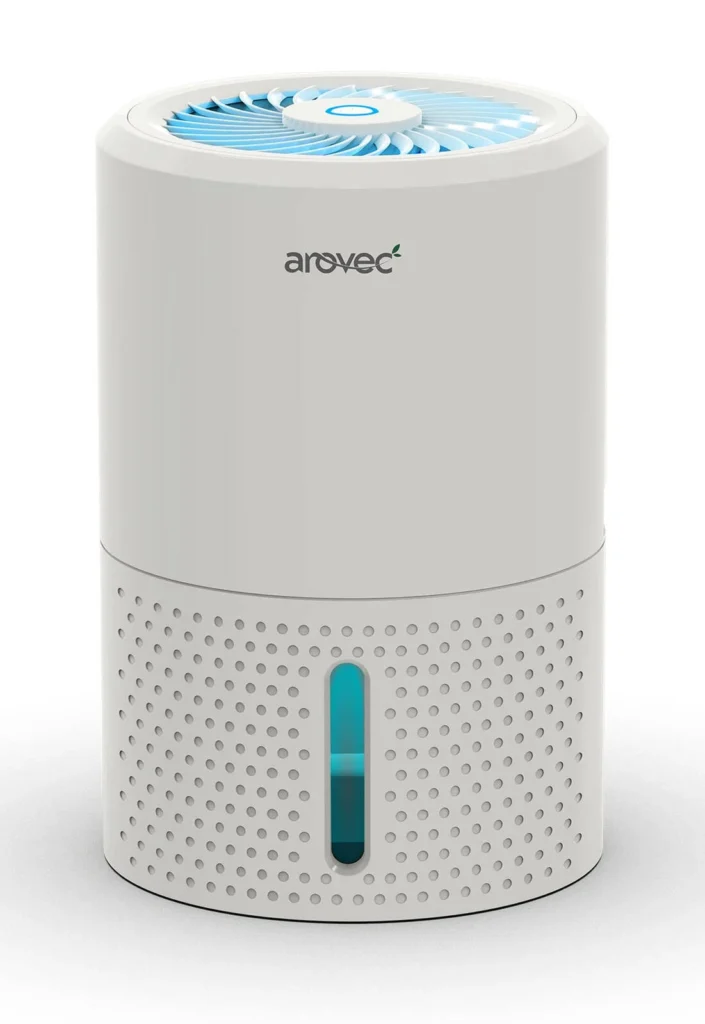
After purchasing and unboxing the AROVEC Compact Dehumidifier, I found it to be a practical Budget Dehumidifier Australia for extremely small places. I really liked its thermo-electric Peltier construction because it delivered very silent operation, stayed lightweight enough to move around easily, and used very little power. I used it in a walk-in closet, and it helped keep the space fresh while reducing the chance of mould growth on my shoes and stored items.
The biggest downside I noticed was its very poor extraction rate of about 300 mL per day. When I compared it with compressor types, the difference was obvious. It simply did not have the strength to remove heavy condensation or reduce the humidity of a whole bedroom. In a larger or very damp room, it ran continuously without making a noticeable difference. Even with that limitation, I think it is still a worthwhile purchase if you only need an affordable solution for wardrobes, closets, or other compact spaces.
Devanti 2L Dehumidifier Air Purifier
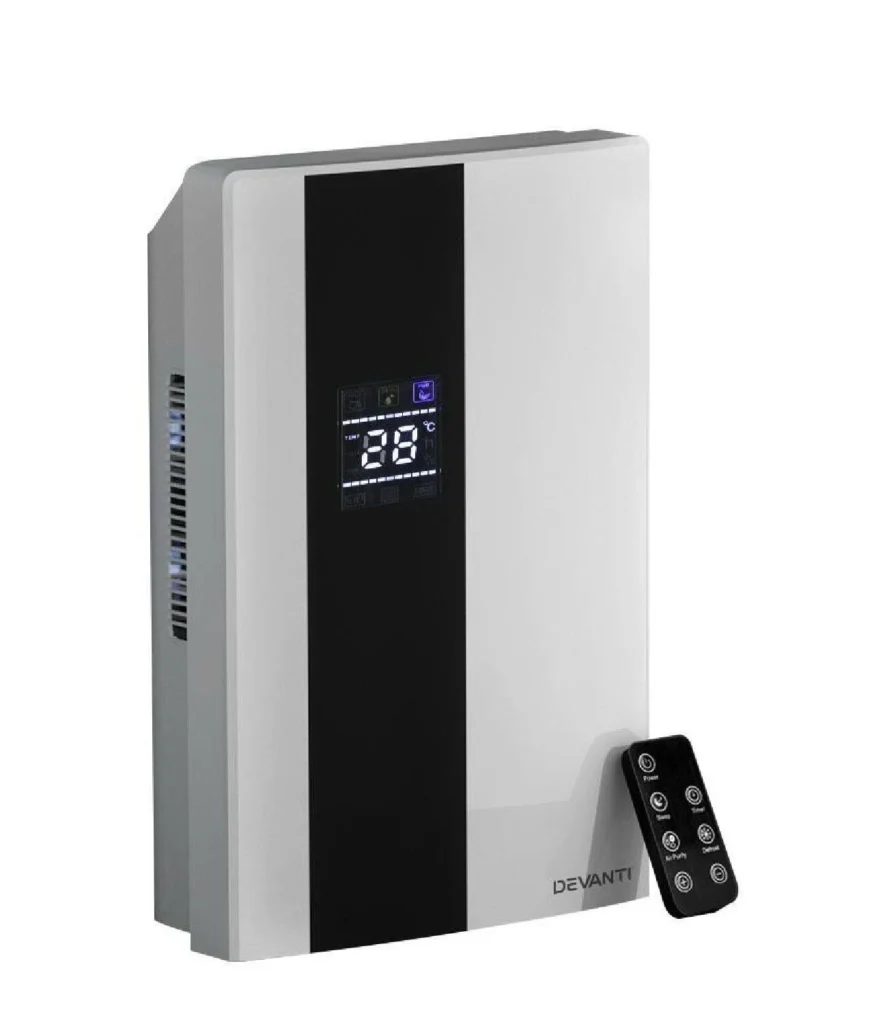
After I purchased and unboxed the Devanti Dehumidifier 2L Air Purifier White, I felt it offered an excellent balance for anyone looking for a Budget Dehumidifier Australia. Compared with the Arovec, I immediately appreciated the large 2L water tank because I did not have to empty it every day. I also liked the integrated photocatalyst filter, which removed moisture while helping to purify the air at the same time. That dual use made it a great bargain for my compact spaces, especially a small windowless bathroom and laundry nook.
The only drawback I noticed was that it relies on thermo-electric technology. During cooler weather, especially when the ambient temperature drops below 15°C, its performance became noticeably weaker. Compared with the Kogan models, it struggled more with sudden increases in moisture and cooler temperatures. Even so, for warm conditions and small rooms, I believe it is still a worthwhile and affordable purchase that delivers excellent everyday value.
For Medium Rooms & Living Areas (Under $250)
Kogan 6L Dehumidifier
After I purchased and unboxed the Kogan 6L Dehumidifier, I quickly realised it delivers true compressor-driven power at a very affordable price, making it an excellent Budget Dehumidifier Australia for serious dampness problems. What impressed me most was its ability to remove up to 6 litres of water from the air every day. I noticed a clear improvement in damp air and window condensation, especially in my master bedroom. I also found the continuous drainage line extremely convenient because I could leave it running unattended next to a drain without worrying about emptying the tank.
The downside I noticed was that compressor technology naturally produces higher operating noise and pushes out slightly heated exhaust air. Compared with the smaller Arovec and Devanti units, it is much more powerful, although it still cannot match the rapid-drying capacity of heavy-duty machines. Even so, I believe it offers outstanding value and is a smart purchase for larger rooms with persistent moisture issues.
Kogan SmarterHome Dehumidifier
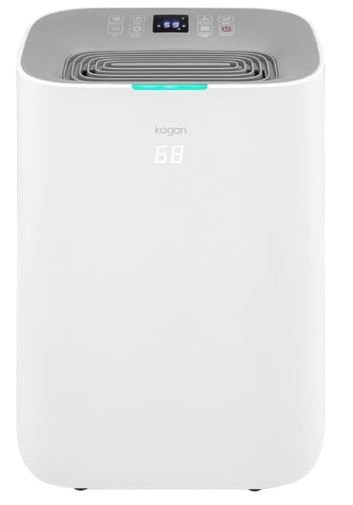
After I purchased and unboxed the Kogan SmarterHome 20L Dehumidifier, I could immediately see why it stands out as a Budget Dehumidifier Australia for larger homes. I tested it in a big open-plan living space and was impressed by its 20-liter daily extraction capacity. It removed moisture much faster than the smaller models I had used before. The large 6.5-liter tank also made a noticeable difference because I did not have to empty it frequently. I found it especially useful for controlling the humidity throughout a whole flat, and it easily dried a rack of wet clothes overnight during rainy weather.
Another feature I really appreciated was the auto-defrost function, which helped it perform well in chilly conditions. The Wi-Fi smart controls were also convenient because I could monitor and adjust the settings without walking over to the machine.
The only drawbacks I noticed were its greater power draw, heavier weight, and larger physical dimensions. Compared with the Arovec and Devanti, it takes up much more space and is not something I would recommend for a small bedroom or closet. Those compact units are more than enough for smaller areas.
However, when I compared all the models I tested, nothing matched the Kogan SmarterHome 20L Dehumidifier for extraction power at this price. If you have serious mould problems, need to manage high humidity in a large home, or regularly dry clothes indoors, I believe this model offers outstanding value. For anyone needing a powerful Budget Dehumidifier Australia, I think it is a purchase that is well worth making.
How We Test
Every Budget Dehumidifier Australia featured in our guide goes through a practical, hands-on testing process before we recommend it. Rather than relying only on manufacturer specifications, we purchase or source the products, unbox them, and use them in real Australian home environments. We spend several weeks to months testing each model to understand how it performs during everyday use, ensuring our recommendations are based on genuine experience.
We begin by evaluating moisture removal performance in different environments, including wardrobes, bathrooms, bedrooms, laundry rooms, and open-plan living spaces. We check how effectively each dehumidifier reduces humidity, controls damp air, removes window condensation, and helps prevent mould from developing.
Next, we verify the advertised litres per day extraction capacity. We compare the actual amount of water collected under both moderate and high-humidity conditions to see whether each unit performs as claimed.
Energy efficiency is another important part of our testing. A good Budget Dehumidifier Australia should not only be affordable to buy but also economical to run. We monitor electricity usage during extended operation and evaluate features such as the humidistat, auto shut-off, and sleep mode, which help reduce unnecessary power consumption.
We also assess the noise level (dB) by running every model during the day and overnight. This allows us to determine whether the unit is suitable for bedrooms, home offices, or other quiet spaces.
Ease of use is carefully considered throughout our testing. We examine water tank removal, portability, control layout, cleaning, filter maintenance, and the convenience of using a continuous drainage hose for long operating periods.
Finally, we inspect build quality, durability, and useful features such as auto-defrost, Wi-Fi smart controls, and air purification functions. We compare every model with competing products in the same price range and only recommend a Budget Dehumidifier Australia that delivers reliable performance, practical features, energy efficiency, and excellent long-term value.

Danny
Danny Ashton is the Lead Tester for our Dehumidifier Australia reviews, with hands-on experience evaluating dehumidifiers across Australian homes and climates. He assesses moisture removal performance, energy efficiency, noise levels, water tank capacity, ease of use, and long-term reliability, delivering practical, experience-based insights that help readers choose the best dehumidifier for healthier, more comfortable indoor living.